Math for Game Development and WebGL Part 2: Vector Multiplication
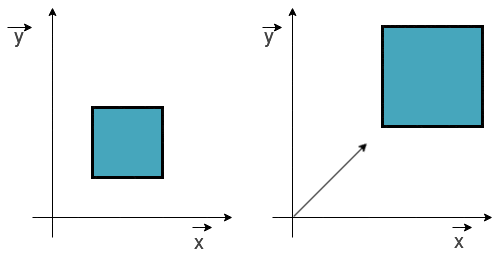
In the last post we talked about what a vector was, how to add and subtract vectors, and how to find the magnitude of a vector. We also demonstrated that by adding vectors we could translate (aka, move) a square around in two dimensions. Now we’ll look at scaling vectors using multiplication. Multiply Vector by Scalar […]
Math for Game Development and WebGL Part 1: Vectors
After rekindling my interest in 3D game development, I looked at WebGL. Being a web dev, this made sense. Unfortunately resources for this are mediocre at best. While WebGL2Fundamentals and the Introduction to Computer Graphics book do cover some of what’s needed, they largely skip the actual math and just tell you to do something. […]
Transforming Mouse Coordinates to Canvas Coordinates
Learn to transform the mouse cursor into transformed canvas coordinates, allowing you to drag, zoom to cursor, and interact with graphics in the canvas regardless of the canvas’s current transformation state. Extremely useful for html games and image editing programs. This post takes a modern approach to solving the problem using vanilla JavaScript, and explains the solution simply and in detail.

Learn Ionic Cordova File and Image Uploading By Building an Instagram Style App
Keeping images with your components, or: How to avoid weird paths and be more modular
A simple way to avoid horrible image paths (../../../../images/ooh.jpg) and keep a more modular design. Makes use of Webpack and gives a very simple example from Angular, although this will work in any framework. Inspired by my Stack Overflow question about setting an image src to a relative path in Angular.
Ionic 3 Beta Available Now
The Ionic 3 beta with Angular 4 built in is available now! It’s still a work in progress though, lazy loading is broken on Windows and it seems is in flux altogether. This is still an early beta, so it’s not surprising it’s not quite working yet, I’ll continue to update this post as the beta stabilizes over time.
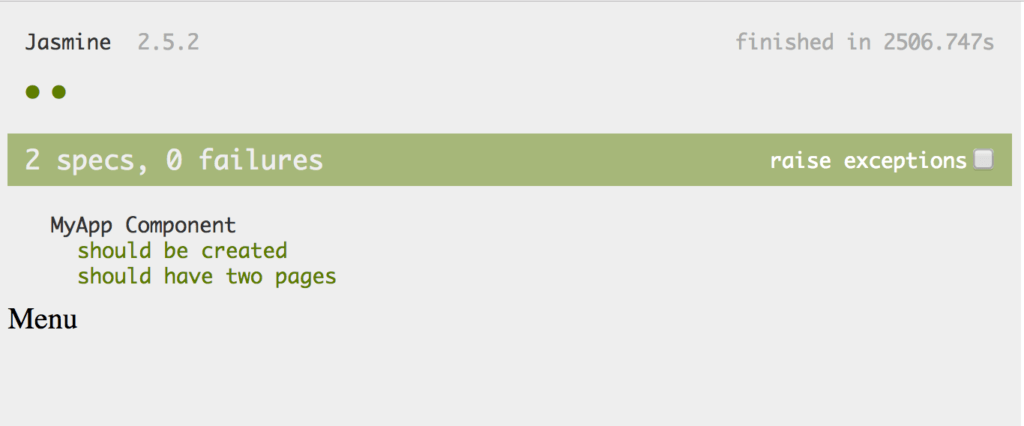
Ionic 2 Unit Testing Setup: The Best Way
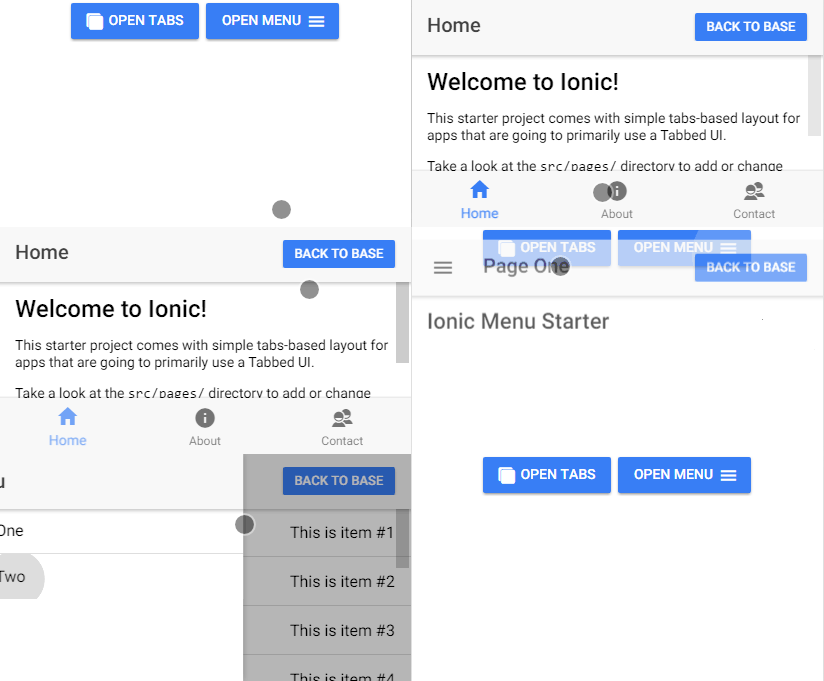
One Ionic 2 App with All Layouts, Blank, Menu, and Tabs
This tutorials really just extends this article on showing and hiding the menu. Here we go one step further and start with a ‘Blank’ layout, adding just two buttons to let the user launch into either a tab or menu layout. A “back to base” button is added to to each child layout for quick navigation back […]
Http Interceptor in Angular 2
Angular 1 had a concept of http inteceptors for handling things like placing a token on the headers, responding to auth errors and redirecting, responding to all other errors, handling loading spinners, the list goes on. In Angular 2 that is no longer a thing, instead we simply extend the http class.